Compare
Beach Tent vs Beach Umbrella
An umbrella is faster and takes no floor space. A tent gives far more shade and does not become airborne. The second point matters more than people think.
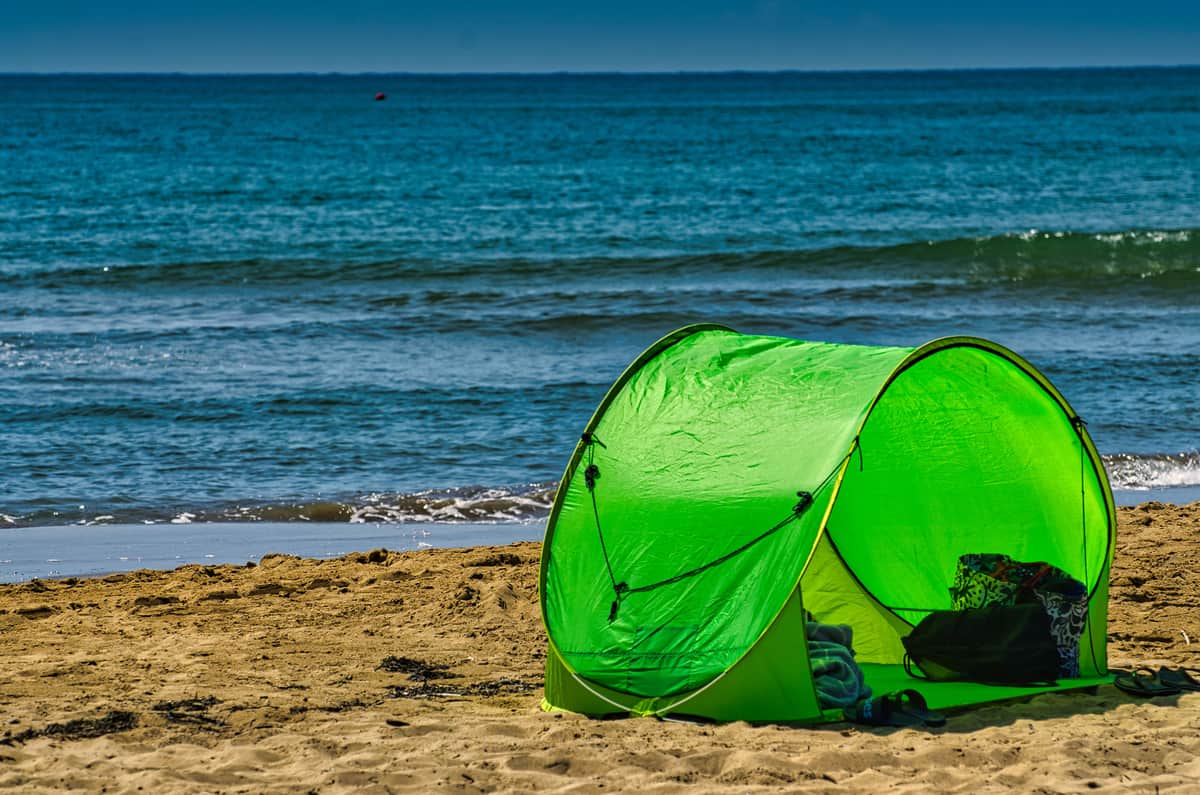 Category photo
Top pick · Most beach days
Sun Ninja Beach Tent, 4-Person
A pole-and-sand-anchor shade that covers a family without the bulk of a cabana, and the size most people should start with.
#ad We do not publish a price we cannot verify today. How this is funded
Quick picks
| # | Product | Best for | Carry weight | Price |
|---|---|---|---|---|
| 1 | Sun Ninja Beach Tent, 4-Person A pole-and-sand-anchor shade that covers a family without the bulk of a cabana, and the size most people should start with. | Most beach days | 7.9 lb in its bag (Sun Ninja) | Check price |
| 2 | 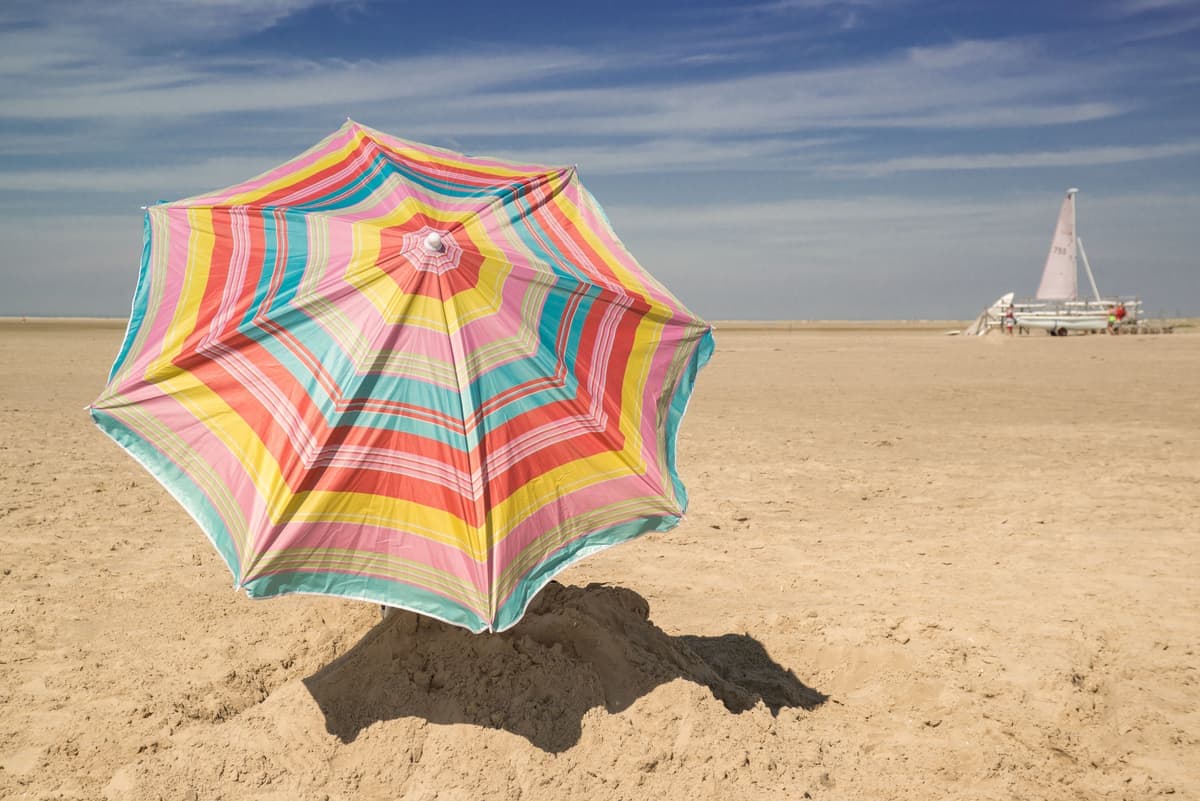 beachBUB All-In-One Beach Umbrella System An umbrella sold with its own ballast base, which is the only version of this product category that answers the safety problem. | An umbrella that stays put | Not published as a total system weight | Check price |
| 3 | 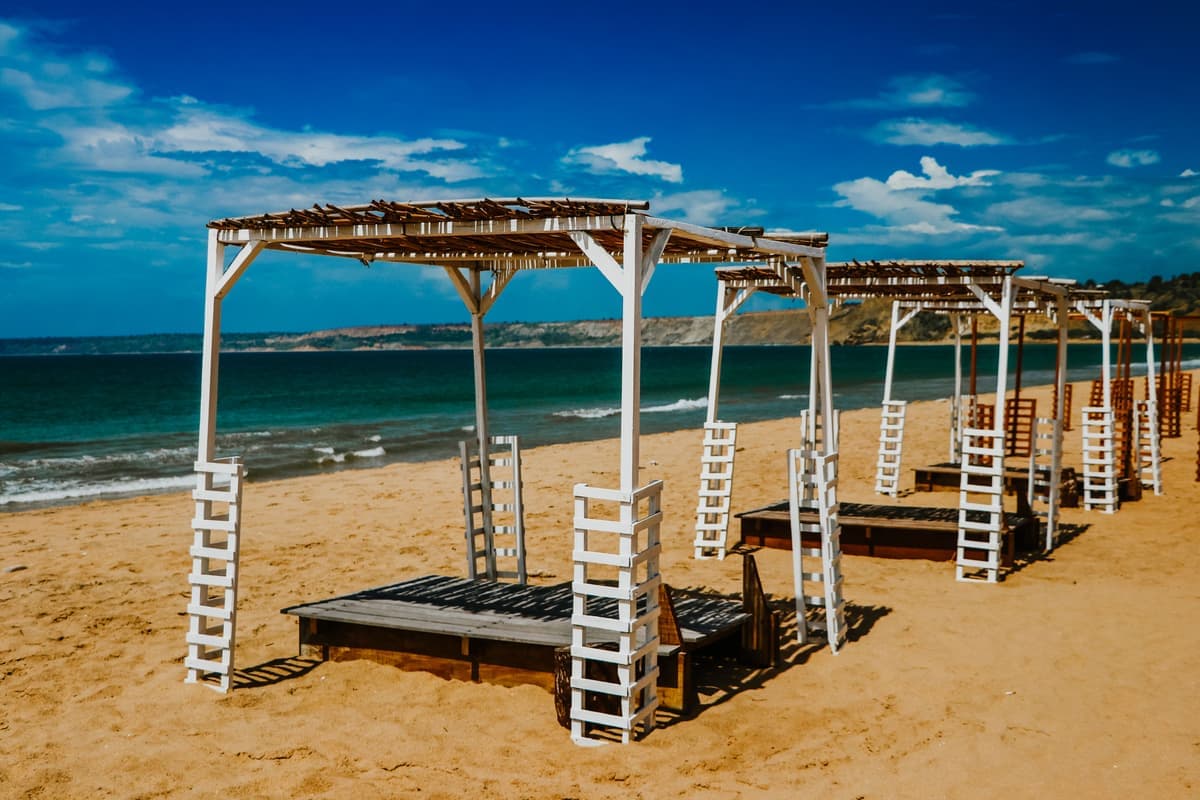 Neso Grande A four-corner stretch canopy anchored with sand-filled bags, sized by Neso for three to six people. | Windy beaches | Neso does not publish a packed weight for the Grande | Check price |
| 4 | AMMSUN 6.5 ft Fringe Beach Umbrella A 7.15 lb tilting umbrella with eight ribs — the straightforward option when you are not buying a base. | The lightest full-size umbrella here | 7.15 lb (AMMSUN) | Check price |
Scroll the table sideways on a narrow screen. Every weight above is the figure its manufacturer publishes; where a manufacturer publishes none, the table says so rather than borrowing a retailer's number.
The short answer
Coverage: it is not close
A 6 ft beach umbrella shades roughly 28 sq ft, by CoolCabana's own comparison figure. A 7.5 x 7 ft canopy covers about 53 sq ft and a 10 x 10 ft one covers 100. The umbrella is also a circle with its deepest shade in the middle, so the usable area is smaller still once the sun moves off vertical.
| Beach umbrella | Beach tent / canopy | |
|---|---|---|
| Shade area | About 28 sq ft at 6 ft, 44 at 7.5 ft | 53-100 sq ft typical |
| Weight | 7.15 lb (AMMSUN 6.5 ft) | 6-8.8 lb (Sun Ninja range) |
| Packed length | About 5 ft | 15.7-17.7 in (Sun Ninja) |
| Setup | Seconds, plus anchoring | Minutes |
| Anchoring | One point, in sand | Four sand anchors |
| Floor space used | A pole | Four corners |
| Travels in luggage | No | Yes |
Published figures from the makers in our registry.
The packed-length row is the one travelers should notice. Both weigh about the same; only one of them fits in a suitcase.
The safety difference, stated properly
An umbrella concentrates its entire wind load at a single point in loose sand. When it lets go it goes as one object, pole first. This is why ASTM F3681-24 exists as a beach umbrella safety standard and why beachBUB publishes a 44 mph wind tunnel result and a 75 lb pole-resistance target for its systems.
A four-anchor canopy distributes its load and fails gradually: a corner comes loose and you notice. The redundancy is the safety feature, and no umbrella has it.
Choose an umbrella if
- You want shade up in seconds
- The beach is crowded and floor space is the constraint
- You are shading one or two people
- You will buy a proper ballast base with it
Choose a tent or canopy if
- You are shading three or more people
- Your beach gets windy at any point in the day
- You fly with your beach gear
- You want shade that does not need repositioning every hour
The hybrid most people should consider
A canopy for the group plus a 2 lb clamp-on umbrella for whoever wanders off to sit by the water. Total weight is barely more than a full-size umbrella alone, and it covers both jobs. See clamp-on shade.
Every pick in full
Category photo#1 · Most beach days
Sun Ninja Beach Tent, 4-Person
A pole-and-sand-anchor shade that covers a family without the bulk of a cabana, and the size most people should start with.
| Carry weight | 7.9 lb in its bag (Sun Ninja) |
|---|---|
| Packed size | 17.7 x 7.5 x 7.1 in carry bag (Sun Ninja) |
| Size / capacity | 7.5 x 7 ft canopy, four poles |
| Setup | Bury four sand pouches, raise the poles; pegs included for grass |
| How it holds down | Held by sand-filled pouches you dig in, not pegs pushed into dry sand |
| UPF / materials | UPF 50+ (Sun Ninja) |
What it does well
- The best size-to-weight balance in the range: family coverage under 8 lb
- Sand-pouch anchoring works in dry sand, where tent pegs simply pull out
- Machine washable, which matters more than it sounds after a season of salt
- Ships with a sand shovel and grass pegs, so it works away from the beach
Where it falls short
- Four poles and four buried pouches is a real setup, not a pop-up
- An open canopy: it blocks sun from above but gives no shelter from blowing sand
#ad We do not publish a price we cannot verify today. How this is funded
Specifications above are Sun Ninja's own, read from their published listing.
Category photo#2 · An umbrella that stays put
beachBUB All-In-One Beach Umbrella System
An umbrella sold with its own ballast base, which is the only version of this product category that answers the safety problem.
| Carry weight | Not published as a total system weight |
|---|---|
| Packed size | Oversized 48 in carry bag with a padded shoulder strap (beachBUB) |
| Size / capacity | 7.5 ft canopy |
| Setup | Dig, seat the base, fill it; a sand scoop and Sand Gopher tool are included |
| How it holds down | Built around the CPSC finding that a 7.5 ft umbrella needs 75 lb of resistance at the pole |
| UPF / materials | UPF 50+ (beachBUB) |
What it does well
- Ships as a system: umbrella, ballast base, carry bag, sand scoop and sand tool
- beachBUB cites the Consumer Product Safety Commission's 75 lb resistance figure and designs to it, rather than selling you an anchor separately
- Commercial-grade 1.5 mm wall aluminum pole and 10 mm fiberglass ribs
Where it falls short
- A 48 in carry bag is a long thing to get into a car, let alone onto a plane
- Costs more than a plain umbrella because you are buying the base you would have needed anyway
#ad We do not publish a price we cannot verify today. How this is funded
Specifications above are beachBUB USA's own, read from their published listing.
Category photo#3 · Windy beaches
Neso Grande
A four-corner stretch canopy anchored with sand-filled bags, sized by Neso for three to six people.
| Carry weight | Neso does not publish a packed weight for the Grande |
|---|---|
| Packed size | Not published; ships in a shoulder carry bag |
| Size / capacity | Sized by Neso for 3-6 people |
| Setup | Fill the four corner anchor bags with sand, raise two poles |
| How it holds down | Corner bags are filled on site, so the hold-down weight is the beach itself |
| UPF / materials | UPF 50+, water-resistant nylon/Lycra blend (Neso) |
What it does well
- The stretch nylon/Lycra canopy gives rather than flaps, which is why this design suits wind
- Anchor weight is sand you fill on arrival — nothing heavy to carry in
- Two poles to deal with, against four on most pole-and-pouch shades
- Neso publishes UPF 50+, and the Skin Cancer Foundation recommends its Sidelines model in the same fabric
Where it falls short
- Neso publishes no packed weight, so you cannot plan a carry-on around it
- A stretched canopy needs its corners pulled genuinely taut or it sags
#ad We do not publish a price we cannot verify today. How this is funded
Specifications above are Neso's own, read from their published listing.
Category photo#4 · The lightest full-size umbrella here
AMMSUN 6.5 ft Fringe Beach Umbrella
A 7.15 lb tilting umbrella with eight ribs — the straightforward option when you are not buying a base.
| Carry weight | 7.15 lb (AMMSUN) |
|---|---|
| Packed size | Not published; a folded 6.5 ft umbrella is roughly 5 ft long |
| Size / capacity | 6.5 ft canopy |
| Setup | Push-button tilt; the pole is screwed or augered into sand |
| How it holds down | Eight reinforced ribs and a lock slider; no ballast base is included |
| UPF / materials | UPF 50+, blocks over 98% of UV (AMMSUN) |
What it does well
- 7.15 lb is genuinely light for a 6.5 ft canopy
- Push-button tilt, which matters more than buyers expect as the sun moves
- AMMSUN publishes both the UPF rating and the UV block percentage
Where it falls short
- No anchor or base in the box — budget for one, and read our anchor guide first
- A plain umbrella in wind is the single most common piece of airborne beach gear
#ad We do not publish a price we cannot verify today. How this is funded
Specifications above are AMMSUN's own, read from their published listing.