Guides
What Is UPF 50+?
It is a fabric rating, not a guarantee about the space underneath. The difference matters more at the beach than anywhere else.
 Category photo
Top pick · Most beach days
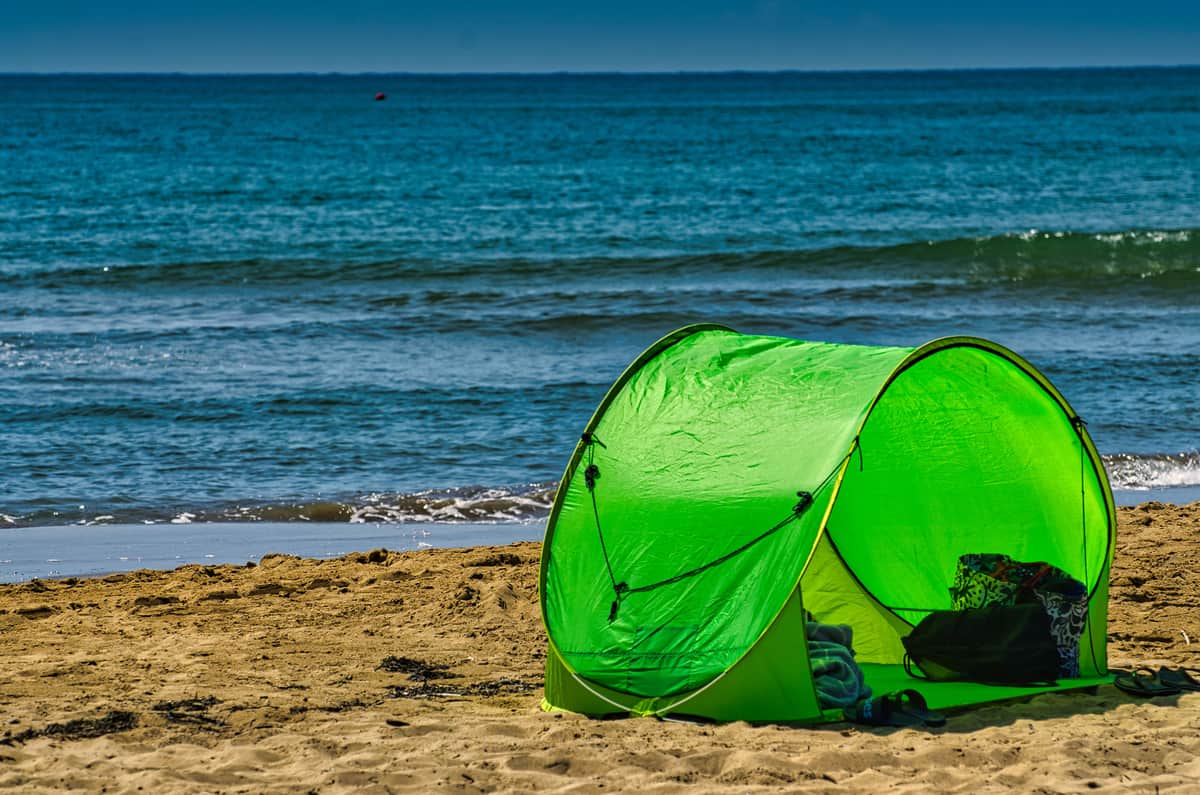
Sun Ninja Beach Tent, 4-Person
A pole-and-sand-anchor shade that covers a family without the bulk of a cabana, and the size most people should start with.
#ad We do not publish a price we cannot verify today. How this is funded
Quick picks
| # | Product | Best for | Carry weight | Price |
|---|---|---|---|---|
| 1 | Sun Ninja Beach Tent, 4-Person A pole-and-sand-anchor shade that covers a family without the bulk of a cabana, and the size most people should start with. | Most beach days | 7.9 lb in its bag (Sun Ninja) | Check price |
| 2 | 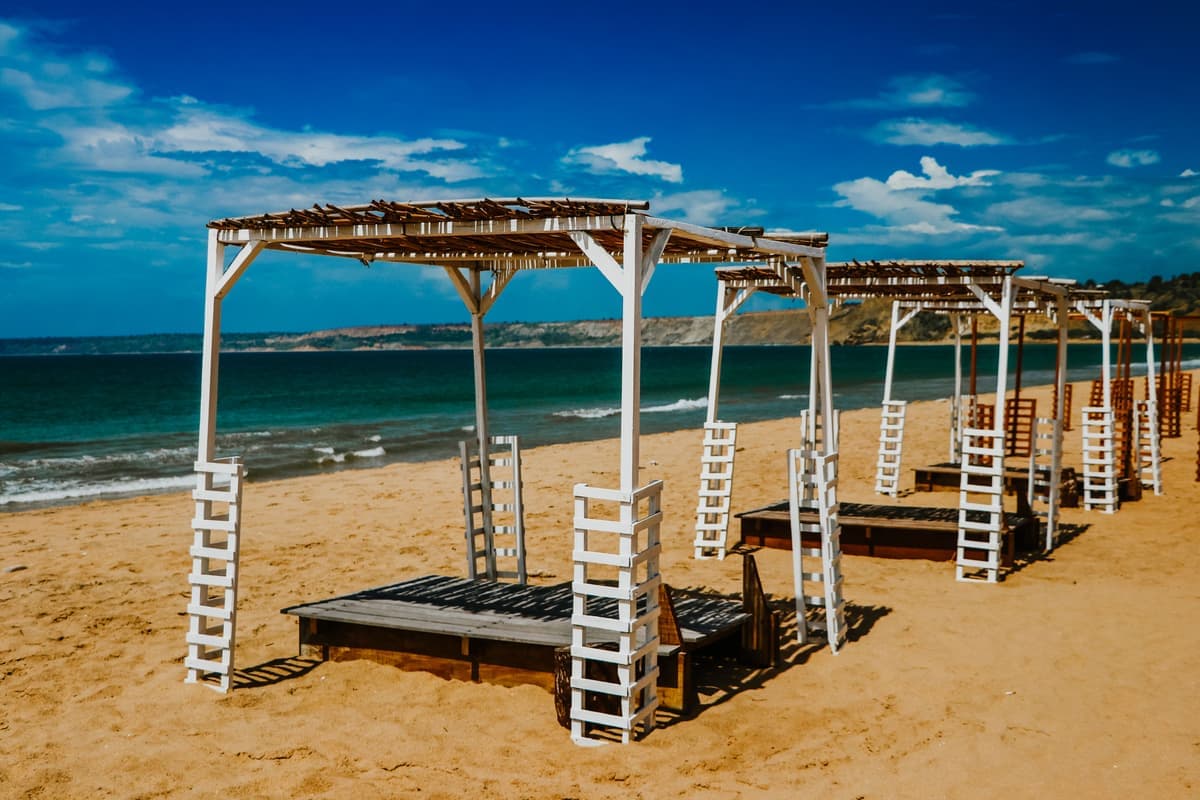 Neso Grande A four-corner stretch canopy anchored with sand-filled bags, sized by Neso for three to six people. | Windy beaches | Neso does not publish a packed weight for the Grande | Check price |
| 3 | 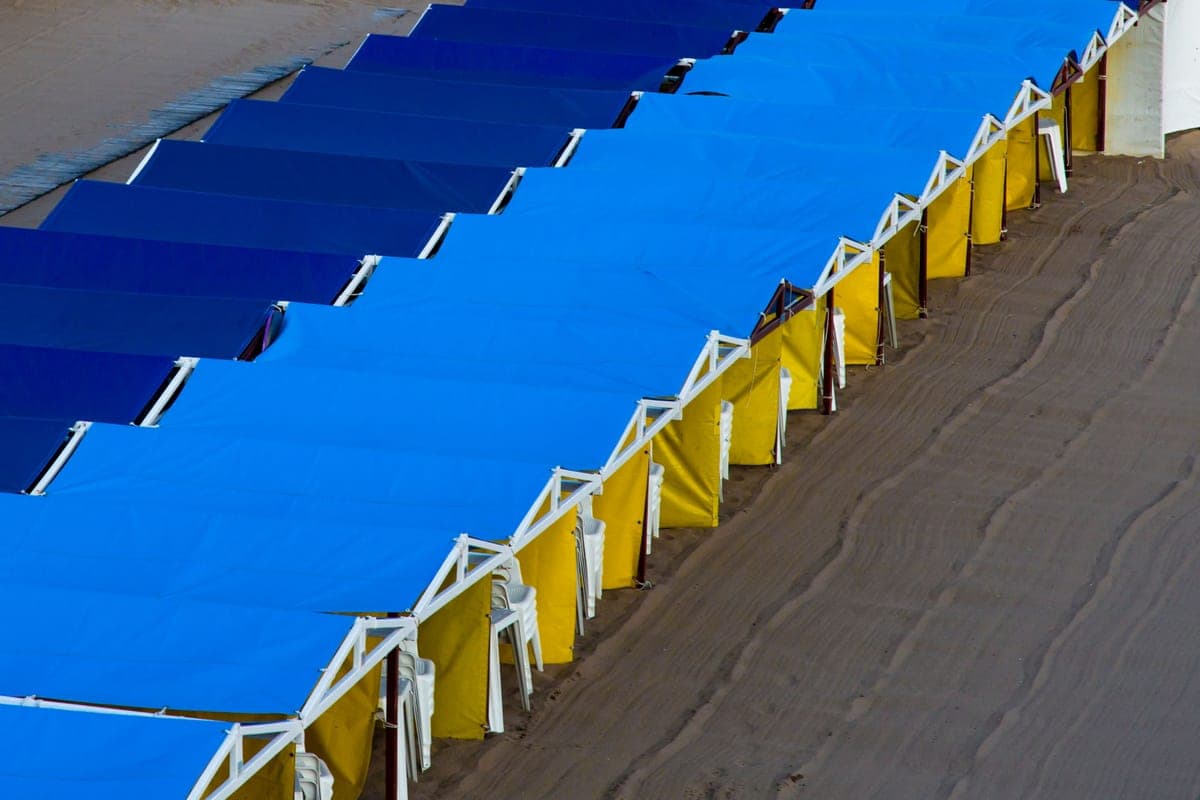 CoolCabana 5, Large An 8 x 8 ft shelter whose own sand pockets hold 35 lb of ballast, which is the whole argument for a cabana over an umbrella. | The most shade per pitch | CoolCabana does not publish a carry weight | At CoolCabanawe earn nothing |
| 4 | 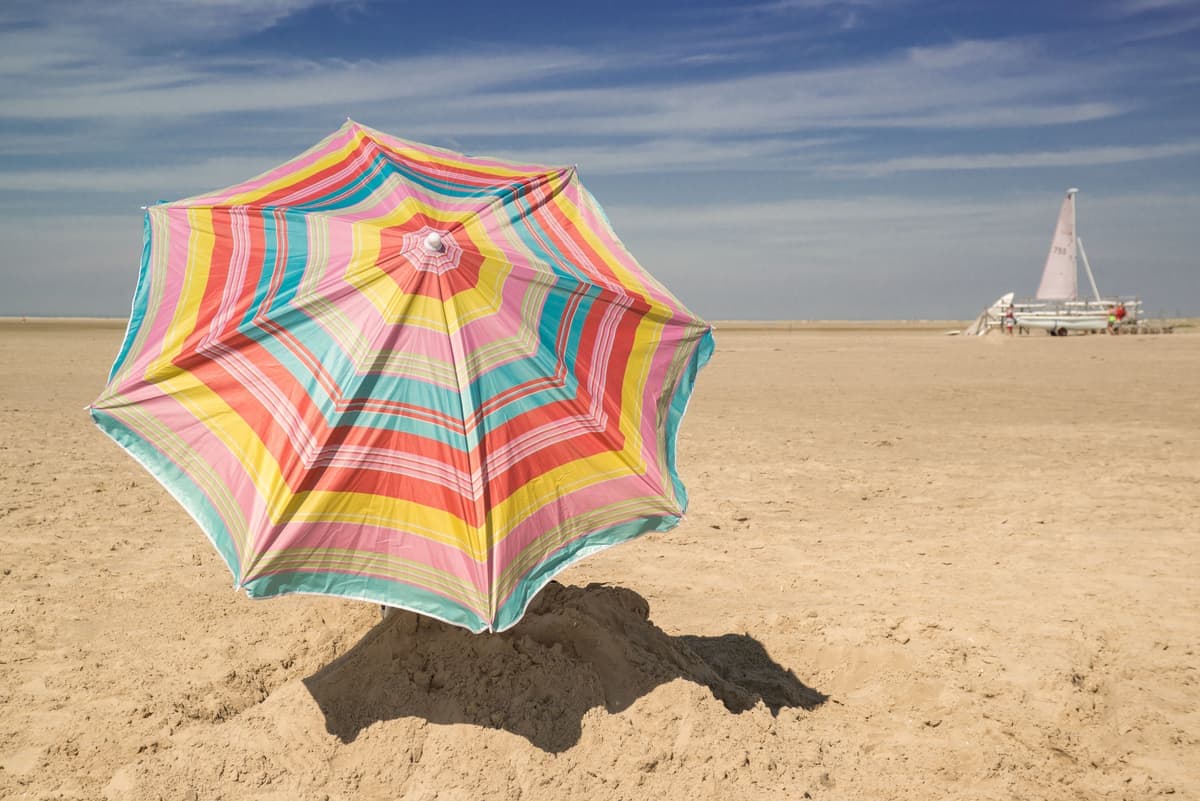 AMMSUN 6.5 ft Fringe Beach Umbrella A 7.15 lb tilting umbrella with eight ribs — the straightforward option when you are not buying a base. | The lightest full-size umbrella here | 7.15 lb (AMMSUN) | Check price |
Scroll the table sideways on a narrow screen. Every weight above is the figure its manufacturer publishes; where a manufacturer publishes none, the table says so rather than borrowing a retailer's number.
The short answer
UPF against SPF
| UPF | SPF | |
|---|---|---|
| Applies to | Fabric | Sunscreen on skin |
| Measures | UV transmitted through the material | How much longer skin resists burning |
| Covers | UVA and UVB | Primarily UVB, unless labeled broad spectrum |
| UPF 50+ means | No more than 2% of UV passes through | n/a |
| Degrades with | Wear, stretching, wetting, age | Time, water, sweat, rubbing |
Two different ratings people routinely conflate.
The practical upshot: a UPF 50+ canopy over your head is doing a great deal, and it is doing it only for the radiation that would have come through that fabric.
The reflected UV problem
Sand and water are both reflective to ultraviolet, which is why people burn at the beach in ways they do not burn in a garden. Sitting under a canopy removes the direct overhead component, and leaves the reflected component arriving from in front of you, off the water, and from the bright sand all around.
This is why "we were in the shade all day" and "we still burned" are both true, and why sunscreen under a beach canopy is not redundant. It is also why hats with brims help under shade: they block the upward-reflected component a canopy cannot.
What degrades a UPF rating
- Stretching. Pulling a fabric thinner opens the weave and lets more UV through. This is worth knowing about stretch canopies specifically — the property that makes them good in wind is the one that opens the weave under tension.
- Wetting. Many fabrics transmit more UV wet than dry.
- Age and wear. UV degrades the fibers and the coatings that block it, which is exactly the exposure a beach shade gets.
- Thinning at stress points. Where a canopy pulls hardest, the weave opens most.
Who publishes a rating, in our registry
Sun Ninja, Neso, CoolCabana, beachBUB and AMMSUN all publish UPF 50+ for their shade products. AMMSUN additionally publishes that its canopy blocks over 98% of UV, which is the same claim expressed the other way round. Shibumi publishes no UPF figure on its product pages.
Neso notes that the Skin Cancer Foundation recommends its Sidelines model as an effective UV protectant — a third-party recommendation rather than a rating, and worth distinguishing from one.
For how much shade each of these actually casts, see beach canopies, and for how UV exposure changes through the day, how to have shade at the beach.
Every pick in full
Category photo#1 · Most beach days
Sun Ninja Beach Tent, 4-Person
A pole-and-sand-anchor shade that covers a family without the bulk of a cabana, and the size most people should start with.
| Carry weight | 7.9 lb in its bag (Sun Ninja) |
|---|---|
| Packed size | 17.7 x 7.5 x 7.1 in carry bag (Sun Ninja) |
| Size / capacity | 7.5 x 7 ft canopy, four poles |
| Setup | Bury four sand pouches, raise the poles; pegs included for grass |
| How it holds down | Held by sand-filled pouches you dig in, not pegs pushed into dry sand |
| UPF / materials | UPF 50+ (Sun Ninja) |
What it does well
- The best size-to-weight balance in the range: family coverage under 8 lb
- Sand-pouch anchoring works in dry sand, where tent pegs simply pull out
- Machine washable, which matters more than it sounds after a season of salt
- Ships with a sand shovel and grass pegs, so it works away from the beach
Where it falls short
- Four poles and four buried pouches is a real setup, not a pop-up
- An open canopy: it blocks sun from above but gives no shelter from blowing sand
#ad We do not publish a price we cannot verify today. How this is funded
Specifications above are Sun Ninja's own, read from their published listing.
Category photo#2 · Windy beaches
Neso Grande
A four-corner stretch canopy anchored with sand-filled bags, sized by Neso for three to six people.
| Carry weight | Neso does not publish a packed weight for the Grande |
|---|---|
| Packed size | Not published; ships in a shoulder carry bag |
| Size / capacity | Sized by Neso for 3-6 people |
| Setup | Fill the four corner anchor bags with sand, raise two poles |
| How it holds down | Corner bags are filled on site, so the hold-down weight is the beach itself |
| UPF / materials | UPF 50+, water-resistant nylon/Lycra blend (Neso) |
What it does well
- The stretch nylon/Lycra canopy gives rather than flaps, which is why this design suits wind
- Anchor weight is sand you fill on arrival — nothing heavy to carry in
- Two poles to deal with, against four on most pole-and-pouch shades
- Neso publishes UPF 50+, and the Skin Cancer Foundation recommends its Sidelines model in the same fabric
Where it falls short
- Neso publishes no packed weight, so you cannot plan a carry-on around it
- A stretched canopy needs its corners pulled genuinely taut or it sags
#ad We do not publish a price we cannot verify today. How this is funded
Specifications above are Neso's own, read from their published listing.
Category photo#3 · The most shade per pitch
CoolCabana 5, Large
An 8 x 8 ft shelter whose own sand pockets hold 35 lb of ballast, which is the whole argument for a cabana over an umbrella.
| Carry weight | CoolCabana does not publish a carry weight |
|---|---|
| Packed size | Folds to 3 ft 5 in (CoolCabana) |
| Size / capacity | 64 sq ft of shade, 8 x 8 ft |
| Setup | One middle pole on the large size, plus a sand spike |
| How it holds down | Sand pockets hold 35 lb of ballast (CoolCabana) |
| UPF / materials | UPF 50+ (CoolCabana) |
What it does well
- 64 sq ft against roughly 28 sq ft for a typical 6 ft beach umbrella, by CoolCabana's own comparison
- Ballast is designed in: the sand pockets take 35 lb with no extra anchor to buy
- One middle pole on the large size, where the medium uses two
Where it falls short
- Folds to 3 ft 5 in, so it is a checked-bag item, not a carry-on one
- No published carry weight, which is a real gap on a product sold on portability
Manufacturer's own store, linked for its spec sheet. We earn no commission on this link.
Specifications above are CoolCabana's own, read from their published listing.
Category photo#4 · The lightest full-size umbrella here
AMMSUN 6.5 ft Fringe Beach Umbrella
A 7.15 lb tilting umbrella with eight ribs — the straightforward option when you are not buying a base.
| Carry weight | 7.15 lb (AMMSUN) |
|---|---|
| Packed size | Not published; a folded 6.5 ft umbrella is roughly 5 ft long |
| Size / capacity | 6.5 ft canopy |
| Setup | Push-button tilt; the pole is screwed or augered into sand |
| How it holds down | Eight reinforced ribs and a lock slider; no ballast base is included |
| UPF / materials | UPF 50+, blocks over 98% of UV (AMMSUN) |
What it does well
- 7.15 lb is genuinely light for a 6.5 ft canopy
- Push-button tilt, which matters more than buyers expect as the sun moves
- AMMSUN publishes both the UPF rating and the UV block percentage
Where it falls short
- No anchor or base in the box — budget for one, and read our anchor guide first
- A plain umbrella in wind is the single most common piece of airborne beach gear
#ad We do not publish a price we cannot verify today. How this is funded
Specifications above are AMMSUN's own, read from their published listing.