Guides
What Color Beach Umbrella Is Best?
Color affects how hot it feels and how dark the shade looks. The UV protection comes from the fabric's construction, not its color.
 Category photo
Top pick · The lightest full-size umbrella here
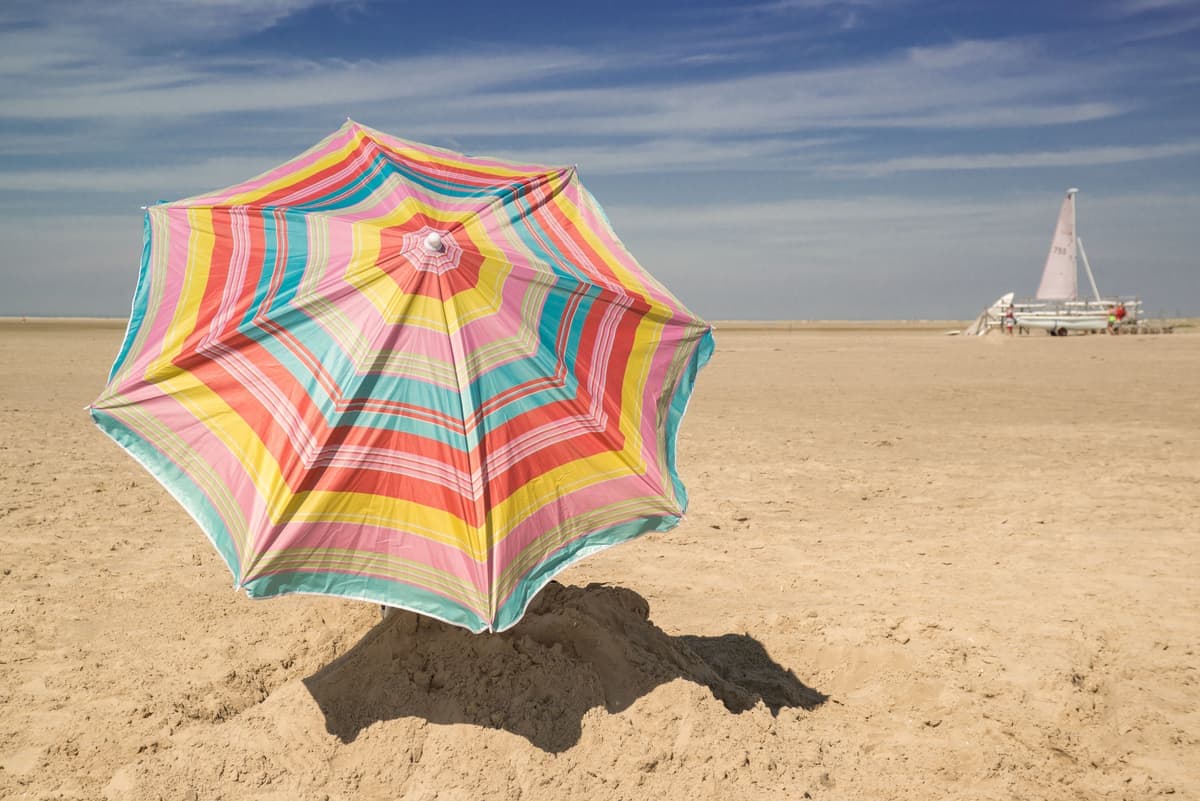
AMMSUN 6.5 ft Fringe Beach Umbrella
A 7.15 lb tilting umbrella with eight ribs — the straightforward option when you are not buying a base.
#ad We do not publish a price we cannot verify today. How this is funded
Quick picks
| # | Product | Best for | Carry weight | Price |
|---|---|---|---|---|
| 1 | AMMSUN 6.5 ft Fringe Beach Umbrella A 7.15 lb tilting umbrella with eight ribs — the straightforward option when you are not buying a base. | The lightest full-size umbrella here | 7.15 lb (AMMSUN) | Check price |
| 2 | beachBUB All-In-One Beach Umbrella System An umbrella sold with its own ballast base, which is the only version of this product category that answers the safety problem. | An umbrella that stays put | Not published as a total system weight | Check price |
| 3 | 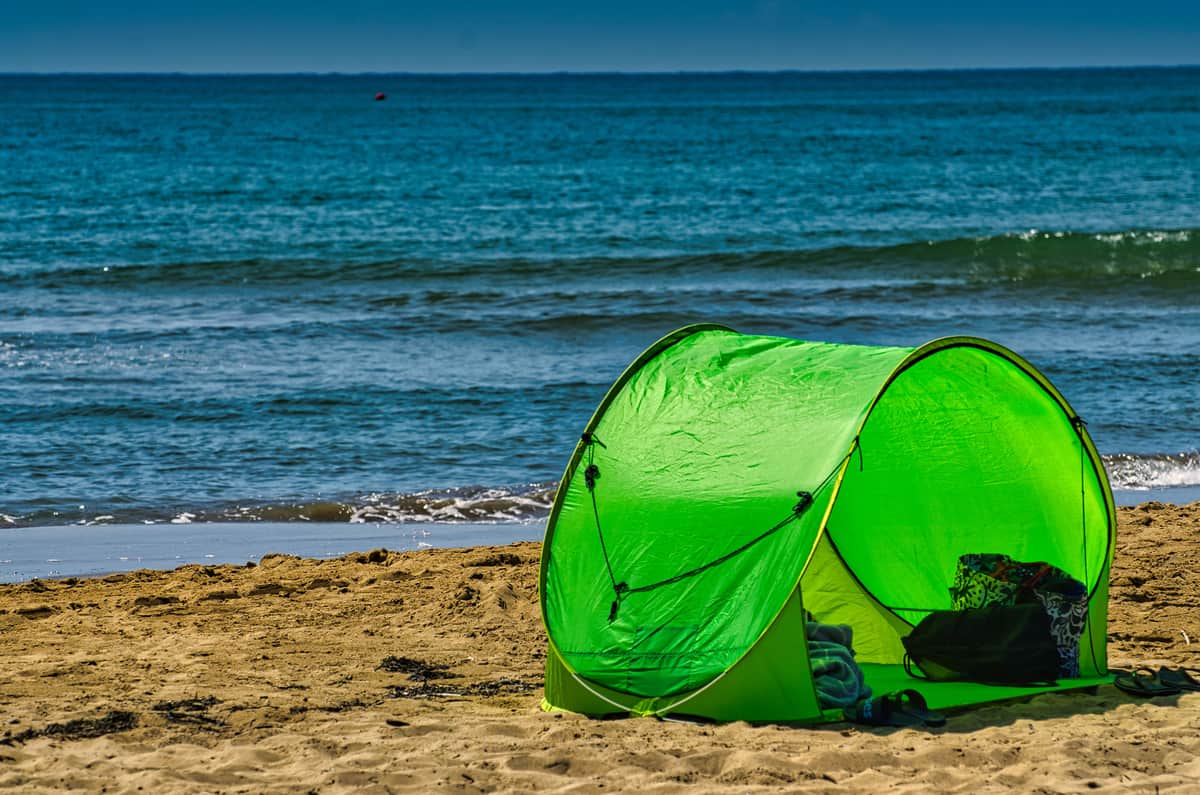 Sun Ninja Beach Tent, 4-Person A pole-and-sand-anchor shade that covers a family without the bulk of a cabana, and the size most people should start with. | Most beach days | 7.9 lb in its bag (Sun Ninja) | Check price |
| 4 | 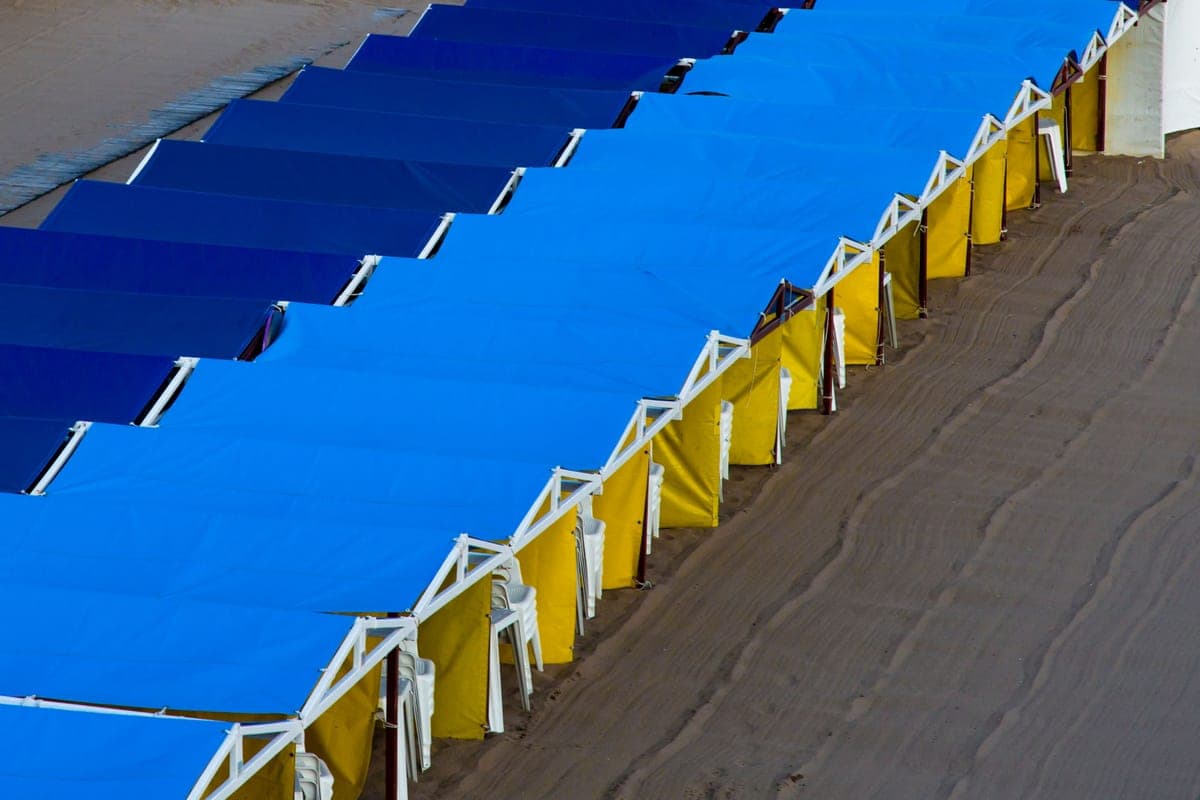 CoolCabana 5, Large An 8 x 8 ft shelter whose own sand pockets hold 35 lb of ballast, which is the whole argument for a cabana over an umbrella. | The most shade per pitch | CoolCabana does not publish a carry weight | At CoolCabanawe earn nothing |
Scroll the table sideways on a narrow screen. Every weight above is the figure its manufacturer publishes; where a manufacturer publishes none, the table says so rather than borrowing a retailer's number.
The short answer
What color does change
- Heat absorbed by the canopy. A dark canopy absorbs more visible light and gets hotter, and some of that heat radiates down. A light canopy reflects more.
- How dark the shade looks. A dark canopy transmits less visible light, so the shade appears deeper. That is a visual effect, and people routinely read it as better UV protection.
- Glare. A white canopy can be bright to look up at; a darker underside is easier on the eyes. Some umbrellas are deliberately light outside and dark underneath for exactly this reason.
- Visibility. A distinctive canopy is how your family finds you on a busy beach, which is a genuinely practical consideration.
What color does not change much
UV transmission. A fabric's UPF rating comes from fiber type, weave density, weight and any UV treatment applied. Dye contributes, and it is one factor among several rather than the main one. A tightly woven treated light fabric can easily outperform a loosely woven dark one.
This is why the published rating is the thing to look at: UPF 50+ means the fabric transmits no more than 2% of UV, whatever color it is. Sun Ninja, Neso, CoolCabana, beachBUB and AMMSUN all publish UPF 50+; Shibumi does not publish a figure. See what UPF 50+ means.
Does a dark canopy make the shade cooler?
Not necessarily, and often the opposite. A dark canopy blocks more visible light, so the shade looks deeper, while the canopy itself absorbs more energy and gets hotter — and a hot canopy radiates downward. A light canopy looks brighter underneath and runs cooler overhead.
Airflow matters far more than color either way. This is the same reason an enclosed tent traps heat and an open canopy does not, regardless of what color either one is.
What to actually prioritize
- A published UPF rating — UPF 50+ where available.
- Enough shade area for your group. See umbrella sizing.
- A real anchoring plan. See anchors.
- Weight you will actually carry.
- Then color.
Every pick in full
Category photo#1 · The lightest full-size umbrella here
AMMSUN 6.5 ft Fringe Beach Umbrella
A 7.15 lb tilting umbrella with eight ribs — the straightforward option when you are not buying a base.
| Carry weight | 7.15 lb (AMMSUN) |
|---|---|
| Packed size | Not published; a folded 6.5 ft umbrella is roughly 5 ft long |
| Size / capacity | 6.5 ft canopy |
| Setup | Push-button tilt; the pole is screwed or augered into sand |
| How it holds down | Eight reinforced ribs and a lock slider; no ballast base is included |
| UPF / materials | UPF 50+, blocks over 98% of UV (AMMSUN) |
What it does well
- 7.15 lb is genuinely light for a 6.5 ft canopy
- Push-button tilt, which matters more than buyers expect as the sun moves
- AMMSUN publishes both the UPF rating and the UV block percentage
Where it falls short
- No anchor or base in the box — budget for one, and read our anchor guide first
- A plain umbrella in wind is the single most common piece of airborne beach gear
#ad We do not publish a price we cannot verify today. How this is funded
Specifications above are AMMSUN's own, read from their published listing.
Category photo#2 · An umbrella that stays put
beachBUB All-In-One Beach Umbrella System
An umbrella sold with its own ballast base, which is the only version of this product category that answers the safety problem.
| Carry weight | Not published as a total system weight |
|---|---|
| Packed size | Oversized 48 in carry bag with a padded shoulder strap (beachBUB) |
| Size / capacity | 7.5 ft canopy |
| Setup | Dig, seat the base, fill it; a sand scoop and Sand Gopher tool are included |
| How it holds down | Built around the CPSC finding that a 7.5 ft umbrella needs 75 lb of resistance at the pole |
| UPF / materials | UPF 50+ (beachBUB) |
What it does well
- Ships as a system: umbrella, ballast base, carry bag, sand scoop and sand tool
- beachBUB cites the Consumer Product Safety Commission's 75 lb resistance figure and designs to it, rather than selling you an anchor separately
- Commercial-grade 1.5 mm wall aluminum pole and 10 mm fiberglass ribs
Where it falls short
- A 48 in carry bag is a long thing to get into a car, let alone onto a plane
- Costs more than a plain umbrella because you are buying the base you would have needed anyway
#ad We do not publish a price we cannot verify today. How this is funded
Specifications above are beachBUB USA's own, read from their published listing.
Category photo#3 · Most beach days
Sun Ninja Beach Tent, 4-Person
A pole-and-sand-anchor shade that covers a family without the bulk of a cabana, and the size most people should start with.
| Carry weight | 7.9 lb in its bag (Sun Ninja) |
|---|---|
| Packed size | 17.7 x 7.5 x 7.1 in carry bag (Sun Ninja) |
| Size / capacity | 7.5 x 7 ft canopy, four poles |
| Setup | Bury four sand pouches, raise the poles; pegs included for grass |
| How it holds down | Held by sand-filled pouches you dig in, not pegs pushed into dry sand |
| UPF / materials | UPF 50+ (Sun Ninja) |
What it does well
- The best size-to-weight balance in the range: family coverage under 8 lb
- Sand-pouch anchoring works in dry sand, where tent pegs simply pull out
- Machine washable, which matters more than it sounds after a season of salt
- Ships with a sand shovel and grass pegs, so it works away from the beach
Where it falls short
- Four poles and four buried pouches is a real setup, not a pop-up
- An open canopy: it blocks sun from above but gives no shelter from blowing sand
#ad We do not publish a price we cannot verify today. How this is funded
Specifications above are Sun Ninja's own, read from their published listing.
Category photo#4 · The most shade per pitch
CoolCabana 5, Large
An 8 x 8 ft shelter whose own sand pockets hold 35 lb of ballast, which is the whole argument for a cabana over an umbrella.
| Carry weight | CoolCabana does not publish a carry weight |
|---|---|
| Packed size | Folds to 3 ft 5 in (CoolCabana) |
| Size / capacity | 64 sq ft of shade, 8 x 8 ft |
| Setup | One middle pole on the large size, plus a sand spike |
| How it holds down | Sand pockets hold 35 lb of ballast (CoolCabana) |
| UPF / materials | UPF 50+ (CoolCabana) |
What it does well
- 64 sq ft against roughly 28 sq ft for a typical 6 ft beach umbrella, by CoolCabana's own comparison
- Ballast is designed in: the sand pockets take 35 lb with no extra anchor to buy
- One middle pole on the large size, where the medium uses two
Where it falls short
- Folds to 3 ft 5 in, so it is a checked-bag item, not a carry-on one
- No published carry weight, which is a real gap on a product sold on portability
Manufacturer's own store, linked for its spec sheet. We earn no commission on this link.
Specifications above are CoolCabana's own, read from their published listing.