Guides
Are Beach Umbrellas Dangerous?
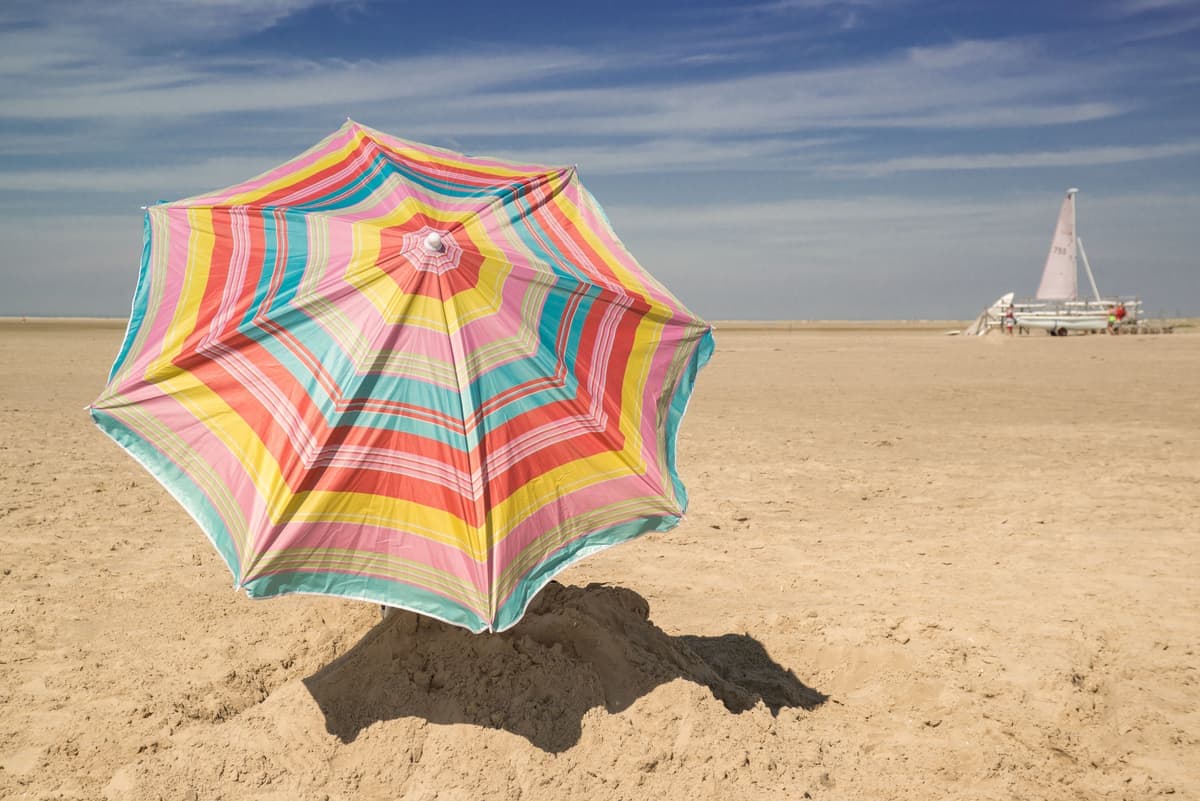
An unanchored beach umbrella is a pointed object with a sail attached. There is a published safety standard for exactly this reason.
 Category photo
Top pick · An umbrella that stays put
beachBUB All-In-One Beach Umbrella System
An umbrella sold with its own ballast base, which is the only version of this product category that answers the safety problem.
#ad We do not publish a price we cannot verify today. How this is funded
Quick picks
| # | Product | Best for | Carry weight | Price |
|---|---|---|---|---|
| 1 | beachBUB All-In-One Beach Umbrella System An umbrella sold with its own ballast base, which is the only version of this product category that answers the safety problem. | An umbrella that stays put | Not published as a total system weight | Check price |
| 2 | beachBUB Outer Banks Commercial Resort Model The rental-fleet version, and the only beach umbrella here whose maker publishes a wind-tunnel figure and a safety-standard margin. | The strongest published wind case | Upper frame and canopy 7 lb 4 oz (beachBUB) | Check price |
| 3 | AMMSUN 47 in Clamp-On Chair Umbrella A 2 lb umbrella that clamps to a chair and rotates 180 degrees — the lightest shade in the registry. | Shade for one, carried in a bag | 2 lb (AMMSUN) | Check price |
| 4 | 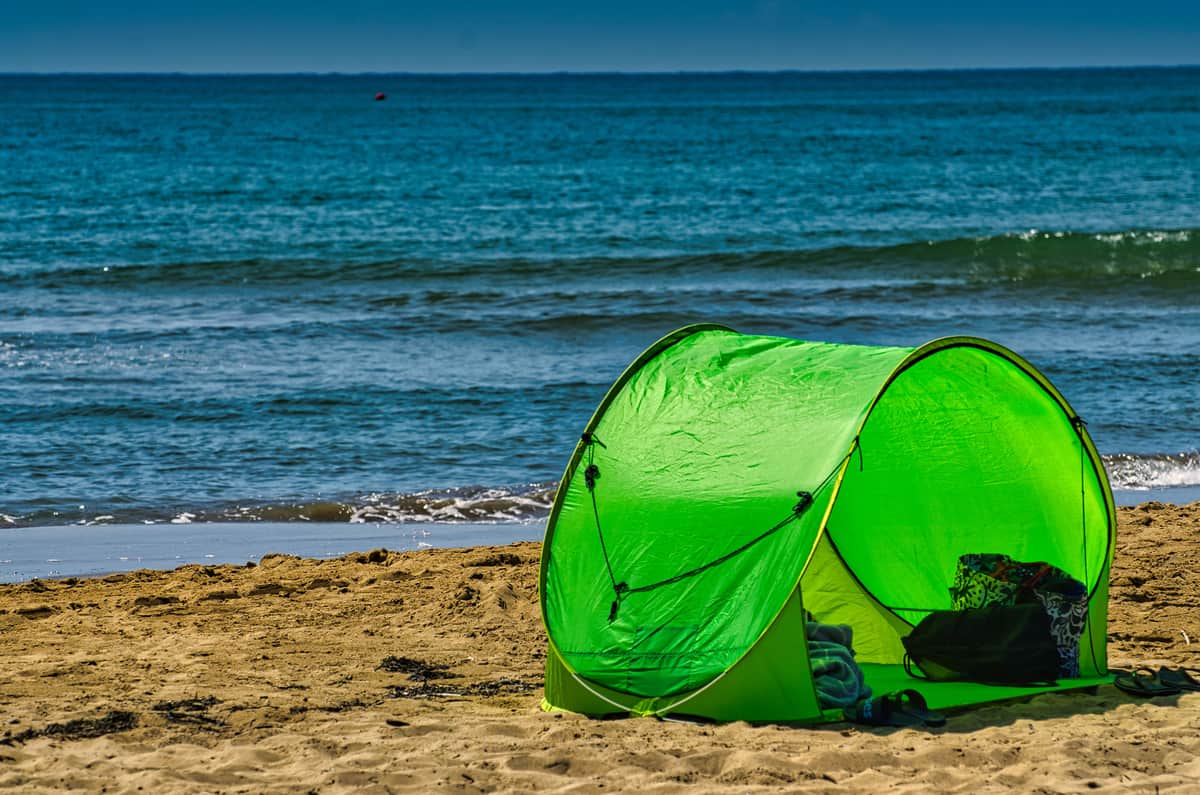 Sun Ninja Beach Tent, 4-Person A pole-and-sand-anchor shade that covers a family without the bulk of a cabana, and the size most people should start with. | Most beach days | 7.9 lb in its bag (Sun Ninja) | Check price |
Scroll the table sideways on a narrow screen. Every weight above is the figure its manufacturer publishes; where a manufacturer publishes none, the table says so rather than borrowing a retailer's number.
The short answer
Why the geometry is the problem
Three things combine. The canopy is a lifting surface, so wind generates real force. The entire load passes through one point in loose sand, so there is no redundancy — it holds, and then it does not. And the object that leaves is a rigid pole with a point on the end, traveling at whatever speed the gust gave it.
Compare that with a four-anchor canopy: the load spreads across four points, failure is usually one corner at a time, and the thing that comes loose is fabric and light poles. The difference is not that canopies are better made. It is that redundancy and mass distribution change the failure mode.
What the industry publishes
| Figure | Source | What it means |
|---|---|---|
| 75 lb resistance at the pole | beachBUB, citing CPSC engineers | What a 7.5 ft umbrella needs to be safe |
| ASTM F3681-24 | Named beach umbrella safety standard | An industry standard exists for this hazard |
| Exceeds that standard by 160% | beachBUB, for its Outer Banks model | A published margin against the standard |
| Survived a 44 mph wind tunnel test | beachBUB, Outer Banks model | A tested figure, rare in this category |
The only published safety evidence we found in this category.
Note that every row in that table comes from one manufacturer. No other umbrella brand in our registry publishes a wind figure, a standard or a resistance target at all. That absence is itself worth knowing when a listing describes an umbrella as wind resistant.
How to reduce the risk, in order of effect
- Use a filled ballast base. The only approach that gets near the 75 lb figure in dry sand.
- Close it when nobody is under it. Most escapes happen while everyone is swimming. Five seconds, removes the entire sail.
- Dig and backfill rather than pushing the pole in. See how to anchor a beach umbrella.
- Tilt into the wind so air spills over rather than lifting from underneath.
- Take it down when the wind builds. Earlier than feels necessary.
- Consider a clamp-on umbrella instead. At 2 lb with the chair as its anchor, there is no pole to leave the ground.
When to stop using one
If your beach regularly runs above about 20 mph, a sand-anchored canopy is the honest recommendation over any umbrella at any price. Four buried anchors and a fabric canopy fail gradually and harmlessly; one pole in loose sand does not. See canopies for high winds.
Every pick in full
Category photo#1 · An umbrella that stays put
beachBUB All-In-One Beach Umbrella System
An umbrella sold with its own ballast base, which is the only version of this product category that answers the safety problem.
| Carry weight | Not published as a total system weight |
|---|---|
| Packed size | Oversized 48 in carry bag with a padded shoulder strap (beachBUB) |
| Size / capacity | 7.5 ft canopy |
| Setup | Dig, seat the base, fill it; a sand scoop and Sand Gopher tool are included |
| How it holds down | Built around the CPSC finding that a 7.5 ft umbrella needs 75 lb of resistance at the pole |
| UPF / materials | UPF 50+ (beachBUB) |
What it does well
- Ships as a system: umbrella, ballast base, carry bag, sand scoop and sand tool
- beachBUB cites the Consumer Product Safety Commission's 75 lb resistance figure and designs to it, rather than selling you an anchor separately
- Commercial-grade 1.5 mm wall aluminum pole and 10 mm fiberglass ribs
Where it falls short
- A 48 in carry bag is a long thing to get into a car, let alone onto a plane
- Costs more than a plain umbrella because you are buying the base you would have needed anyway
#ad We do not publish a price we cannot verify today. How this is funded
Specifications above are beachBUB USA's own, read from their published listing.
Category photo#2 · The strongest published wind case
beachBUB Outer Banks Commercial Resort Model
The rental-fleet version, and the only beach umbrella here whose maker publishes a wind-tunnel figure and a safety-standard margin.
| Carry weight | Upper frame and canopy 7 lb 4 oz (beachBUB) |
|---|---|
| Packed size | Oversized carry bag with extra-wide padded strap and molded handle |
| Size / capacity | 7.5 ft canopy |
| Setup | Same dig-and-fill ULTRA base as the standard system |
| How it holds down | beachBUB states it survived a 44 mph wind tunnel test and exceeds ASTM F3681-24 by 160% |
| UPF / materials | UPF 50+ (beachBUB) |
What it does well
- A published wind-tunnel number and a named safety standard — all but unheard of in this category
- Upper frame and canopy at 7 lb 4 oz, which beachBUB puts at half its commercial rivals
- Ten-year frame warranty
Where it falls short
- Built for rental fleets, and priced that way
- Still a 7.5 ft umbrella: heavy, long and awkward to carry any distance
#ad We do not publish a price we cannot verify today. How this is funded
Specifications above are beachBUB USA's own, read from their published listing.
Category photo#3 · Shade for one, carried in a bag
AMMSUN 47 in Clamp-On Chair Umbrella
A 2 lb umbrella that clamps to a chair and rotates 180 degrees — the lightest shade in the registry.
| Carry weight | 2 lb (AMMSUN) |
|---|---|
| Packed size | Supplied with a shoulder-strap carry bag |
| Size / capacity | 47 in canopy |
| Setup | Loosen the clamp, fix to a chair frame, rotate to the sun |
| How it holds down | Clamped to the chair, so the chair and its occupant are the ballast |
| UPF / materials | Not published as a UPF figure for this model |
What it does well
- 2 lb, which no freestanding shade in this registry comes close to
- Rotates 180 degrees on the clamp, so you chase the sun without moving the chair
- Takes up no floor space on a crowded beach
Where it falls short
- Shades one person, and only while they stay in the chair
- AMMSUN publishes no UPF figure for this model, unlike its full-size umbrellas
#ad We do not publish a price we cannot verify today. How this is funded
Specifications above are AMMSUN's own, read from their published listing.
Category photo#4 · Most beach days
Sun Ninja Beach Tent, 4-Person
A pole-and-sand-anchor shade that covers a family without the bulk of a cabana, and the size most people should start with.
| Carry weight | 7.9 lb in its bag (Sun Ninja) |
|---|---|
| Packed size | 17.7 x 7.5 x 7.1 in carry bag (Sun Ninja) |
| Size / capacity | 7.5 x 7 ft canopy, four poles |
| Setup | Bury four sand pouches, raise the poles; pegs included for grass |
| How it holds down | Held by sand-filled pouches you dig in, not pegs pushed into dry sand |
| UPF / materials | UPF 50+ (Sun Ninja) |
What it does well
- The best size-to-weight balance in the range: family coverage under 8 lb
- Sand-pouch anchoring works in dry sand, where tent pegs simply pull out
- Machine washable, which matters more than it sounds after a season of salt
- Ships with a sand shovel and grass pegs, so it works away from the beach
Where it falls short
- Four poles and four buried pouches is a real setup, not a pop-up
- An open canopy: it blocks sun from above but gives no shelter from blowing sand
#ad We do not publish a price we cannot verify today. How this is funded
Specifications above are Sun Ninja's own, read from their published listing.